
Table of Contents
What exactly is early childhood education (ECE), and why is it more critical than ever in 2026? Simply put, ECE encompasses the period from birth through age eight, focusing on the holistic development of young children in a structured and nurturing environment. It’s not merely preparatory schooling; it’s a foundational process designed to build cognitive, social, emotional, and physical skills that underpin lifelong learning and well-being. As Senior Education Expert and SEO Strategist, I see the landscape of ECE evolving rapidly, driven by scientific advancements, technological integration, and a renewed understanding of childhood development.
The Unparalleled Importance of Early Childhood Education
The significance of quality ECE cannot be overstated. Neuroscience continually reaffirms that the brain develops most rapidly in the early years, forming over a million new neural connections every second. This period, characterized by immense neuroplasticity, is a critical window for intervention and enrichment. According to the U.S. Centers for Disease Control and Prevention (CDC), healthy early development sets the stage for success in school, work, and life. Beyond individual benefits, a robust ECE system yields significant societal returns, including reduced crime rates, increased tax revenues, and improved public health outcomes, as highlighted in numerous reports from institutions like UNESCO and the World Bank.
In 2026, the emphasis in ECE has shifted from purely academic readiness to a more comprehensive view of the child. We’re observing a heightened focus on:
- Social-Emotional Learning (SEL): Developing empathy, self-regulation, resilience, and conflict resolution skills, crucial for navigating complex social dynamics in a digital age.
- Executive Function Skills: Cultivating working memory, cognitive flexibility, and inhibitory control, which are vital for problem-solving and adaptive thinking.
- Digital Literacy & Responsible Tech Use: Integrating age-appropriate technology not just for consumption but for creation, critical thinking, and understanding the digital world safely.
- Cultural Responsiveness & Equity: Ensuring that curricula and pedagogical approaches reflect and respect the diverse backgrounds, languages, and experiences of all children, addressing long-standing equity gaps.
Embracing Holistic Approaches & Digital Literacy in Early Childhood Education
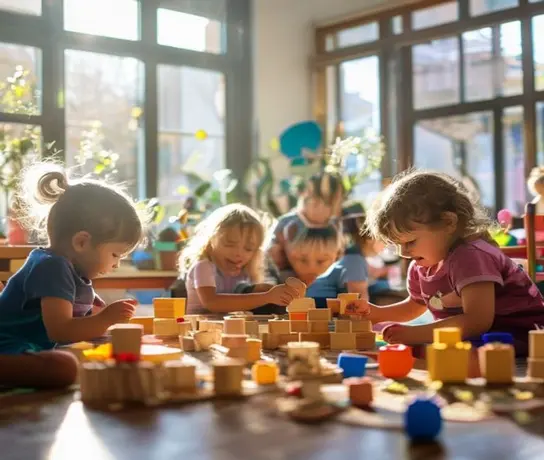
At its core, quality early childhood education goes far beyond rote memorization of ABCs and 123s. Modern pedagogies, such as play-based learning, the Reggio Emilia approach, and adapted Montessori methods, prioritize child-led exploration, discovery, and active engagement. These methods foster intrinsic motivation and a love for learning, rather than compliance.
The integration of technology, once a contentious topic, is now a carefully considered and valuable tool. We’re moving away from passive screen time to interactive, educational apps and platforms that support personalized learning journeys, coding basics through play, and virtual field trips that expand a child’s world view. This measured approach ensures technology enhances, rather than replaces, hands-on experiences and human interaction.
| Feature | Traditional ECE Focus | ECE Focus (Modern) |
|---|---|---|
| Curriculum Emphasis | Literacy & Numeracy (isolated) | Holistic Development (integrated skills) |
| Learning Method | Teacher-led instruction | Child-led play & inquiry-based learning |
| Technology Use | Limited, often for entertainment | Integrated, interactive, intentional for learning & creativity |
| Assessment | Standardized tests, checklists | Formative, observational, portfolio-based |
| Parent Involvement | Information sharing, volunteer opportunities | Collaborative partnership, co-creation of learning experiences |
Navigating the Early Childhood Education Landscape: Challenges and Innovations
Despite its recognized importance, the field of early childhood education faces significant challenges. Workforce shortages, exacerbated by low wages and high burnout rates among educators, remain a critical issue. The National Association for the Education of Young Children (NAEYC) continues to advocate for policy changes that professionalize the ECE workforce, ensuring fair compensation and ongoing professional development. Equitable access to high-quality programs also remains elusive for many families, highlighting persistent socioeconomic and racial disparities.
However, alongside these challenges, innovation is thriving. We’re seeing:
- AI as a Support Tool: AI isn’t replacing educators but assisting with administrative tasks, providing data insights on child progress, and even generating personalized learning activities based on individual needs, freeing educators to focus on direct interaction.
- Nature-Based Learning Resurgence: A renewed appreciation for outdoor classrooms, forest schools, and environmental education, recognizing the profound impact of nature on cognitive development, physical health, and emotional well-being.
- Enhanced Parent-Educator Partnerships: Leveraging secure communication platforms and virtual workshops to build stronger, more transparent collaborations between home and school, recognizing parents as a child’s first and most influential teachers.
These innovative practices within early childhood education settings aim to create more resilient, adaptable, and engaging learning environments for all children.
Beyond ABCs – Future-Proofing Our Youngest Learners
A common, outdated myth is that early childhood education is primarily about getting a head start on reading and math. While these foundational literacies are important, my 15+ years in the field have taught me that the true power of ECE lies in “future-proofing” our children. In an era of rapid technological change and unprecedented global challenges, the most valuable skills are not rote knowledge, but adaptability, creativity, critical thinking, and emotional intelligence.
We must consciously shift the narrative: ECE isn’t just about preparing children for school; it’s about preparing them for a world that doesn’t yet exist. It’s about nurturing their innate curiosity, fostering resilience in the face of uncertainty, and equipping them with the socio-emotional toolkit to thrive in complex environments. Investing in these capacities from birth is the most strategic investment we can make in our collective future, far outweighing the singular pursuit of academic benchmarks.
In conclusion, early childhood education stands as the bedrock of individual potential and societal progress. In 2026, it is a dynamic, evolving field that champions holistic development, leverages responsible innovation, and steadfastly addresses the challenges of equity and access. Investing in quality ECE means investing in a brighter, more equitable, and more adaptable future for everyone.
- ECE prioritizes holistic child development from birth to age eight.
- Modern ECE integrates SEL, executive function, and digital literacy.
- Play-based and inquiry-led pedagogies are central to effective learning.
- Challenges like workforce shortages and equitable access persist, but innovations like AI support and nature-based learning offer promising solutions.
- The true value of ECE is in “future-proofing” children with adaptability and critical thinking, not just academic readiness.

Kurnia Ardha is a senior education strategist at Pralearn covering learning science, admissions, testing, and financial planning. 6+ years, 140+ guides. Method: cognitive research, admissions data, and aid policy modeling. Author of 2,084 education guides since 2022.




More Stories
How to Learn a New Instrument: 7 Proven Steps
Best Music Instrument: 7 Smart Picks for Beginners
Best Instrument: 7 Top Choices for Beginners