
Table of Contents
Choosing the best music instrument for yourself or your child transforms how you experience music for life. According to the National Association for Music Education, students who engage with instrumental music show improved cognitive development and sustained focus. But with hundreds of instruments available, how do you identify the right starting point?
The answer isn’t universal. Your ideal instrument depends on physical attributes, musical goals, and practical constraints like budget and practice space.
What Makes the Best Music Instrument for Beginners
Three factors separate beginner-friendly instruments from challenging ones. First, the learning curve—how quickly you can produce pleasant sounds. Second, the physical demands—whether size, breath control, or finger dexterity creates barriers. Third, the versatility—can this instrument adapt as your musical interests evolve?
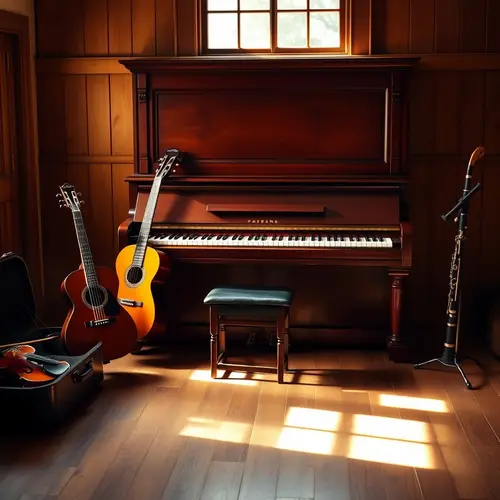
Piano and guitar consistently rank as top choices because they provide immediate visual feedback. You can see the relationship between notes and hand positions. Wind instruments like flute or saxophone require breath control mastery before producing quality tone.
The Piano: Foundation for Musical Literacy
Piano stands as the best music instrument for understanding music theory. The keyboard’s linear layout makes intervals, chords, and scales visually obvious. Within weeks, beginners play recognizable melodies with both hands.
Digital pianos eliminate tuning maintenance and offer headphone practice. Acoustic pianos provide superior touch sensitivity but require regular professional tuning. Budget considerations matter—quality digital pianos start around $500, while acoustic uprights begin near $3,000.
Piano transfers seamlessly to other instruments. Keyboard skills accelerate learning organ, synthesizer, or even melodic percussion instruments like marimba.
Guitar: Portable and Socially Versatile
Guitar earns its place as a contender for best music instrument through sheer versatility. Acoustic, electric, and classical styles each serve different musical contexts. Chord-based playing allows beginners to accompany songs within months.
The physical challenge involves building fingertip calluses and hand strength. Younger children under age 8 may struggle with standard guitar necks—smaller-scale models solve this issue.
According to Guitar Foundation of America guidelines, proper posture and hand positioning prevent long-term strain injuries. Many self-taught players develop bad habits that limit advancement.
String, Wind, and Percussion: Specialized Paths
While piano and guitar dominate beginner recommendations, other instruments offer unique advantages. Understanding these alternatives helps you make informed decisions.
Violin: Technical Precision Meets Emotional Expression
Violin demands patience but rewards dedication. Unlike fretted instruments, violinists must develop perfect pitch awareness to play in tune. The Suzuki method has proven that children as young as 3 can start violin successfully.
Rental programs through music schools make violin accessible without major upfront investment. Quality student violins with appropriate sizing typically cost $200-500.
Clarinet and Saxophone: Wind Instrument Gateway
Clarinet serves as the best music instrument for entering woodwind families. Its single-reed system is easier to control than double-reed instruments like oboe. Saxophone, while larger, uses similar fingering and appeals to students drawn to jazz and contemporary music.
Both require consistent embouchure development—the specific mouth and lip positioning that produces tone. According to woodwind pedagogy research, daily 15-minute practice sessions outperform sporadic longer sessions for embouchure strength.
Drums: Rhythm Foundation for All Musicians
Percussion instruments build timing and coordination that benefit every musical pursuit. Electronic drum kits with mesh heads allow silent practice through headphones—a major advantage for apartment dwellers.
Starting with snare drum rudiments before tackling full kit prevents overwhelming beginners. Many school band programs begin percussion students on bells or xylophone to develop note-reading alongside rhythm.
Comparing Top Beginner Instruments
| Instrument | Initial Cost | Practice Volume | Physical Age Minimum | Theory Learning |
|---|---|---|---|---|
| Piano | $500-3000+ | Controllable (digital) | 4-5 years | Excellent |
| Guitar | $150-800 | Moderate | 6-7 years | Good |
| Violin | $200-600 | High | 3-4 years | Good |
| Clarinet | $300-900 | Moderate-High | 9-10 years | Moderate |
| Drums | $400-1500 | Very High (acoustic) | 5-6 years | Rhythm-focused |
Expert Perspective: The Myth of “Natural Talent”
A pervasive myth claims certain people possess innate musical ability while others don’t. Neuroscience research contradicts this. Dr. K. Anders Ericsson’s deliberate practice studies show that structured, focused practice creates musical skill regardless of starting point.
The best music instrument isn’t determined by mystical talent matching. It’s chosen based on access, interest, and commitment. A student passionate about blues guitar will outpace a disinterested piano student with supposedly better “natural rhythm.”
Practical Decision Framework
Use this systematic approach to identify your optimal starting instrument:
- Assess your musical goals—do you want to play solo, join ensembles, compose, or accompany singers?
- Evaluate physical space and noise tolerance—apartment dwellers need volume-controllable options
- Consider your musical preferences—choosing an instrument that plays music you love sustains motivation
- Factor in lesson availability—obscure instruments may lack qualified local teachers
- Set a realistic practice schedule—15-30 minutes daily beats sporadic marathon sessions
Common Beginner Mistakes to Avoid
Many aspiring musicians sabotage their progress through preventable errors. Buying the cheapest possible instrument often backfires—poorly constructed instruments are harder to play and sound terrible, crushing motivation.
Skipping formal instruction in favor of exclusively using free online resources creates technical problems. A qualified teacher identifies and corrects posture, hand position, and breathing issues before they become ingrained habits.
Setting unrealistic expectations leads to premature quitting. The best music instrument for you is one you’ll still be playing six months from now. Progress follows consistent practice, not overnight transformation.
Maintenance and Long-Term Costs
Factor ongoing expenses into your decision. String instruments need replacement strings every few months. Wind instruments require periodic pad replacement and professional cleaning. Pianos need annual tuning. Guitars need occasional setup adjustments.
Budget $100-300 annually for basic maintenance across most instruments. Neglecting maintenance degrades sound quality and can cause permanent damage.
Making Your Final Selection
The best music instrument emerges from honest self-assessment rather than popularity contests. Piano provides unmatched music theory foundations. Guitar offers social and stylistic flexibility. Violin demands precision but develops exceptional ear training. Wind instruments build breath control and ensemble skills. Drums create rhythmic mastery that enhances every other instrument.
Rent before purchasing when possible. Most music stores offer rent-to-own programs that apply rental payments toward eventual purchase. This lets you test commitment without major financial risk.
Visit music stores to physically handle instruments. Size, weight, and tactile feel influence your connection with the instrument. What excites you when you hold it?
Your journey with the best music instrument begins with a single practice session. Choose something that resonates with your musical vision, commit to regular practice, and find a qualified teacher. The specific instrument matters far less than your dedication to the process.

More Stories
Best Instrument: 7 Top Choices for Beginners
5 Essential Tips for Choosing best instruments for kids
Pioneering the Future: How California Early Childhood Education Revolutionizing The Future