
Table of Contents
Manual skills represent the physical abilities that allow individuals to perform hands-on tasks with precision, coordination, and control. These competencies form the foundation for countless professions and daily activities, from surgical procedures to carpentry work. Developing robust manual skills directly impacts career opportunities, independence, and overall quality of life.
Understanding Manual Skills and Their Core Components
The term encompasses far more than simple hand movements. Fine motor control, hand-eye coordination, bilateral coordination, and tactile sensitivity all contribute to proficient manual ability.
According to the American Occupational Therapy Association, these skills develop through deliberate practice and sensory integration. The neural pathways governing manual dexterity strengthen with repeated, focused engagement.
Many people mistakenly believe manual competence is purely innate. Research from motor learning studies shows that targeted training dramatically improves performance regardless of starting ability level.
Seven Categories of Essential Manual Skills
Precision Grip and Manipulation
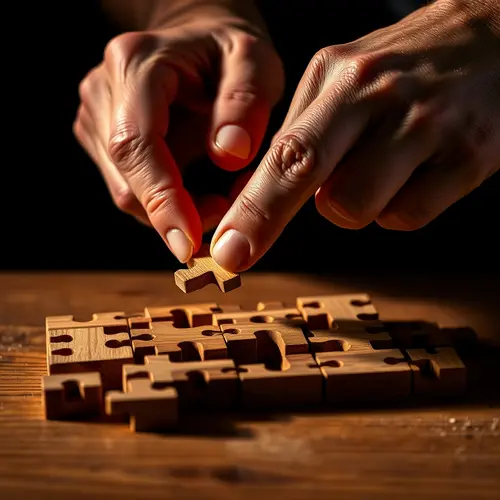
This involves controlling small objects between fingers and thumb. Watchmakers, surgeons, and electronics technicians rely heavily on this capacity.
The pincer grasp (thumb and index finger) handles tasks requiring extreme accuracy. Strengthening these muscles takes consistent practice with progressively smaller objects.
Power Grip and Force Application
Wrapping fingers around tools or objects to apply controlled force defines this category. Construction workers, mechanics, and athletes utilize power grips constantly.
The difference between precision and power grips lies in muscle recruitment patterns. Power grips engage forearm and palm muscles more extensively.
Bilateral Coordination
Using both hands together in synchronized or complementary movements separates novices from experts. Typing, playing musical instruments, and surgical procedures demand high-level bilateral skill.
The corpus callosum, connecting brain hemispheres, facilitates this coordination. Training one hand improves the other through cross education effects documented in neuroscience literature.
Tool Manipulation Proficiency
Extending manual capability through instruments requires proprioceptive awareness. The brain must incorporate tools as extensions of the body schema.
Skilled craftspeople develop intuitive relationships with their tools. This phenomenon, studied extensively in embodied cognition research, reduces cognitive load during complex tasks.
Haptic Sensitivity and Feedback Processing
Touch receptors provide constant information about texture, temperature, pressure, and vibration. Masseuses, quality control inspectors, and textile workers depend on refined tactile discrimination.
Haptic training sharpens these senses measurably. Blindfolded practice accelerates tactile development by forcing greater reliance on touch receptors.
Speed and Rhythm Control
Executing movements at variable tempos with consistent accuracy defines advanced manual skills. Assembly line workers and musicians exemplify this mastery.
Metronome training builds temporal precision. Starting slowly and gradually increasing speed prevents the rushed execution that ingrains errors.
Spatial Visualization in Three Dimensions
Mental rotation of objects and planning movement paths through space supports complex manual tasks. Sculptors, surgeons, and machinists constantly employ this ability.
Virtual reality training shows promise for developing spatial skills. However, physical practice remains superior for building muscle memory and proprioceptive accuracy.
Systematic Development Methods for Manual Skills
Progressive Resistance Training
Start with manageable challenges and incrementally increase difficulty. This approach mirrors strength training principles applied to dexterity.
Grip strengtheners, therapy putty, and finger resistance bands provide measurable progression. Track repetitions and resistance levels to monitor improvement objectively.
Deliberate Practice Protocols
Expert performance research by cognitive psychologists emphasizes focused repetition with immediate feedback. Random, unfocused practice yields minimal gains.
Break complex movements into components. Master each element before integrating them into fluid sequences.
Video recording allows self-analysis of technique flaws. Comparing recordings over time demonstrates progress and identifies persistent problems.
Cross-Training Approaches
Diverse activities transfer benefits across manual skills domains. Rock climbing improves grip strength useful for many professions. Juggling enhances hand-eye coordination broadly applicable to numerous tasks.
The variety principle prevents plateaus and maintains engagement. Rotating between different skill-building activities sustains motivation better than monotonous repetition.
| Skill Type | Primary Development Method | Time to Basic Proficiency | Career Applications |
|---|---|---|---|
| Precision Grip | Small object manipulation drills | 3-6 months | Electronics, jewelry, dental work |
| Bilateral Coordination | Instrument practice, typing exercises | 6-12 months | Surgery, music, data entry |
| Tool Mastery | Apprenticeship with feedback | 12-24 months | Carpentry, mechanics, culinary arts |
| Haptic Sensitivity | Blindfolded texture discrimination | 2-4 months | Quality control, massage therapy |
Common Obstacles and Evidence-Based Solutions
Plateau Breaking Strategies
Stagnation typically signals adaptation to current training stimuli. Introduce novel variations or increased complexity to trigger further development.
Constraint-induced movement therapy, where the dominant hand is restricted, forces the non-dominant hand to develop rapidly. This technique originated in stroke rehabilitation but applies to skill enhancement broadly.
Overcoming Coordination Deficits
Poor hand-eye coordination stems from inadequate visual-motor integration. Catching exercises, reaction drills, and tracking moving targets specifically address these connections.
Balance training improves overall motor control through vestibular system engagement. The connection between balance and manual skills becomes apparent in tasks requiring steady hands.
Practical Application Framework
Begin with self-assessment. Identify which of the seven categories needs attention based on your goals or profession.
Allocate 20-30 minutes daily to focused practice. Consistency matters more than duration. Brief daily sessions outperform infrequent marathon training.
Create measurable benchmarks. Time how long specific tasks take or count successful repetitions. Objective metrics reveal progress invisible to subjective perception.
- Establish baseline measurements for each skill category you target
- Design progressive challenges that increase difficulty by 5-10% weekly
- Incorporate rest days to allow neuromuscular adaptation and consolidation
- Seek expert feedback quarterly to identify technique flaws early
- Document progress through video, written logs, or performance metrics
- Cross-train with complementary activities to prevent overuse injuries
- Adjust training intensity based on fatigue levels and recovery capacity
Long-Term Maintenance and Refinement
Skill decay occurs without regular practice. Maintenance requires less volume than initial acquisition but demands consistency.
Advanced practitioners benefit from teaching others. Explaining techniques reinforces understanding and reveals knowledge gaps. The Feynman technique applies perfectly to manual competencies.
Neuroplasticity research confirms that the brain remains adaptable throughout life. Age-related decline in manual skills reflects disuse more than biological inevitability. Sustained engagement preserves and even enhances capabilities into advanced age.
Building Mastery Through Integrated Practice
True expertise emerges when technical proficiency merges with strategic thinking. Understanding why certain techniques work enables adaptation to novel situations rather than mere replication of learned patterns.
Expert craftspeople develop kinesthetic intelligence that guides decisions intuitively. This embodied knowledge accumulates through thousands of hours engaging with materials and tools.
The journey toward manual skills mastery rewards persistence and intelligent practice. Whether pursuing professional excellence or personal satisfaction, these competencies unlock tangible accomplishments and creative expression. Systematic development transforms clumsy attempts into fluid expertise, proving that capability stems from commitment rather than innate talent alone.

Kurnia Ardha is a senior education strategist at Pralearn covering learning science, admissions, testing, and financial planning. 6+ years, 140+ guides. Method: cognitive research, admissions data, and aid policy modeling. Author of 2,084 education guides since 2022.


More Stories
How to Learn a New Instrument: 7 Proven Steps
Best Music Instrument: 7 Smart Picks for Beginners
Best Instrument: 7 Top Choices for Beginners