
Table of Contents
The easiest instrument to learn depends on your physical coordination, musical goals, and available practice time. For absolute beginners, the ukulele stands out as the most accessible option, requiring minimal finger strength and offering immediate chord-playing satisfaction within the first week. Other highly approachable instruments include keyboard, recorder, harmonica, and basic percussion like djembe or bongos.
Starting your musical journey shouldn’t feel overwhelming. The right instrument choice accelerates progress and maintains motivation through those critical first months of practice.
What Makes an Instrument Easy to Learn?
Several technical factors determine learning difficulty. Instruments with visual layouts like piano keyboards provide immediate spatial understanding of pitch relationships. This visual-tactile connection helps beginners grasp music theory faster than on instruments where notes are less obvious.
Physical accessibility matters tremendously. An instrument requiring complex embouchure (mouth positioning) like trumpet or oboe creates immediate barriers. According to music education research from the National Association for Music Education, instruments with intuitive hand positioning and immediate sound production retain 40% more beginner students through their first year.
Feedback speed is another critical element. Instruments that produce recognizable melodies quickly—like the kalimba or melodica—provide psychological rewards that sustain practice habits.
The Easiest Instrument to Learn: Top 7 Choices
1. Ukulele: The Champion for Quick Progress
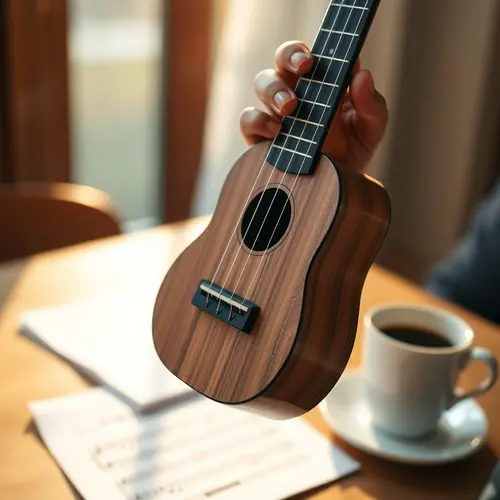
The ukulele dominates beginner instruments for valid reasons. Its four nylon strings require minimal finger pressure compared to guitar’s six steel strings. Basic chord shapes use one or two fingers, allowing complete beginners to play recognizable songs within days.
The compact fretboard means less stretching and strain. Most popular songs translate to three or four simple chord progressions (C, G, Am, F). Your muscle memory develops rapidly because the physical movements are less demanding than virtually any other stringed instrument.
2. Keyboard/Piano: Visual Learning at Its Best
Keyboards offer unmatched theoretical clarity. Each key corresponds to one specific note—no guessing about finger placement or pitch accuracy. This one-to-one relationship between action and sound removes a massive cognitive load.
Digital keyboards provide additional learning advantages: built-in metronomes, light-up keys, and volume control for private practice. Unlike acoustic piano, you can start with an affordable 61-key model and upgrade later. The National Piano Foundation reports that keyboard students grasp reading music 30% faster than students of non-visual instruments.
3. Recorder: Underrated Simplicity
Despite its elementary school reputation, the soprano recorder is genuinely one of the easiest instruments to learn. The fingering system is logical and consistent. Producing sound requires straightforward breath control—no complex embouchure formation.
Quality plastic recorders cost under $15, making it the most budget-friendly serious instrument. The recorder teaches breath support, finger coordination, and music reading without the investment barrier of more expensive options.
4. Harmonica: Pocket-Sized Satisfaction
Diatonic harmonicas are pre-tuned to one key, eliminating wrong-note possibilities. You can create music through simple breathing patterns. Blues and folk styles are particularly accessible because they emphasize rhythm and emotion over technical perfection.
The learning curve is forgiving. Within an hour, most beginners can play simple melodies. Advanced techniques like bending notes come later, but basic proficiency happens fast.
5. Bongos and Hand Percussion
Rhythm instruments bypass the challenge of pitch entirely. Bongos, djembes, and cajons focus on timing, dynamics, and pattern recognition. These skills are fundamental to all musicianship but are easier to isolate and develop independently.
Hand drums provide immediate tactile feedback. You feel the resonance through your body, creating a powerful connection between physical action and sound. This kinesthetic learning style suits people who struggle with the abstract nature of pitched instruments.
6. Kalimba (Thumb Piano)
This African instrument uses metal tines that you pluck with your thumbs. The tuning is preset, often to a pentatonic scale that makes “wrong” notes nearly impossible. You can create beautiful, ambient music without any formal training.
The kalimba’s compact size and gentle learning curve make it ideal for stress relief and casual music-making. Tablature is simple to read, often showing just which tine to pluck in sequence.
7. Melodica: Wind-Keyboard Hybrid
The melodica combines keyboard logic with breath control, offering a bridge between piano and wind instruments. The visual layout provides the same theoretical advantages as piano, while the breath element adds expressive dimension.
It’s portable, affordable (quality models under $50), and works for both solo playing and ensemble participation. Music educators frequently recommend melodicas for adult learners who want harmonic understanding without committing to a full-sized keyboard.
Comparing the Easiest Instrument to Learn
| Instrument | Initial Cost | Physical Demand | Time to First Song | Best For |
|---|---|---|---|---|
| Ukulele | $50-150 | Low | 1-3 days | Chord-based songs, portability |
| Keyboard | $100-300 | Low | 1-2 weeks | Music theory, classical pieces |
| Recorder | $10-40 | Low | 3-5 days | Budget learners, traditional music |
| Harmonica | $20-80 | Medium | 1 hour-3 days | Blues, folk, improvisation |
| Bongos | $40-120 | Low | 30 minutes | Rhythm focus, physical expression |
| Kalimba | $25-80 | Very Low | 1-2 hours | Ambient music, meditation |
| Melodica | $30-100 | Medium | 1 week | Harmonic understanding, portability |
Common Myths About Learning Instruments
The biggest misconception is that musical talent is innate and fixed. Neuroplasticity research shows that consistent practice physically rewires your brain regardless of “natural ability.” The difference between struggling and thriving students typically relates to practice quality, not genetic predisposition.
Another persistent myth suggests adults can’t learn instruments effectively. While children do have some neurological advantages in pattern recognition, adults possess superior metacognition—the ability to analyze and adjust their own learning process. This self-awareness often accelerates adult progress beyond what instructors see in younger students.
The “10,000 hours to mastery” concept gets misapplied. That figure refers to elite professional performance, not functional enjoyment. You can play satisfying music on the easiest instrument to learn within 20-50 hours of focused practice.
Expert Opinion: The 15-Minute Rule
Through teaching hundreds of adult beginners, I’ve identified a critical pattern: students who practice 15 minutes daily outperform those who practice 2 hours weekly. Consistency rewires motor pathways more effectively than cramming.
The instrument itself matters less than this practice architecture. A “harder” instrument practiced daily will yield better results than an “easy” instrument practiced sporadically. Choose an instrument you’ll actually pick up every day, even if it’s not the theoretically simplest option.
Practical Factors Beyond Difficulty
Space and Volume Considerations
Apartment dwellers face real constraints. Acoustic drums are impossible in most shared living situations. Digital alternatives and naturally quiet instruments like ukulele or keyboard with headphones become practical necessities, not just preferences.
Storage matters too. A tuba is technically not the hardest instrument, but its physical footprint creates friction that kills practice habits. Portable instruments remove excuses.
Musical Genre Alignment
Match your instrument to your actual listening preferences. If you love electronic music, a MIDI controller and production software might be your true easiest instrument to learn—even though it’s not traditionally considered “easy.” Intrinsic motivation from playing music you love outweighs objective difficulty metrics.
Classical enthusiasts will find more satisfaction in recorder or keyboard. Blues lovers should prioritize harmonica. This alignment sustains motivation through the inevitable frustration plateaus.
The Learning Curve Reality
Every instrument has a “difficulty wall” at some point. The ukulele is easy for basic strumming but requires significant practice for finger picking patterns. Piano has simple one-note melodies but complex independence when playing different rhythms in each hand.
Understanding this prevents false expectations. Your first week will feel dramatically different from month three. Plan for plateaus and slight regressions—they’re neurologically normal as your brain consolidates new motor patterns.
Resources That Accelerate Progress
Online learning platforms have transformed music education accessibility. Structured video courses provide systematic skill progression that self-teaching from random YouTube videos cannot match. Investment in a quality course (typically $50-200) often saves months of frustrated trial-and-error.
Private instruction remains valuable for personalized feedback. Even monthly check-ins with a qualified teacher can correct developing bad habits before they become ingrained. Many instructors now offer video lessons, reducing scheduling friction.
Your First Easiest Instrument Choice
Select based on a matrix of factors: budget, living situation, musical preferences, and physical comfort. Handle instruments in person when possible—the tactile experience reveals compatibility that specifications cannot.
Don’t overthink the decision. The easiest instrument to learn is the one you’ll consistently practice. Starting creates momentum. You can always add instruments later as your musicianship develops.
Your musical journey begins with a single intentional choice. Pick an accessible instrument, commit to brief daily practice, and trust the compounding effect of consistent effort. Within three months, you’ll surprise yourself with what your hands and ears can accomplish.

More Stories
7 Essential Traditional Skills Worth Mastering
7 Essential Skills Every Professional Orchestra Players Need
7 Essential Music Skills Every Musician Must Master