
Table of Contents
What are the most effective early childhood education tips to truly prepare children for a complex future? The landscape of early learning is dynamic, evolving rapidly with new research and societal shifts. In 2026, the best strategies move beyond rote memorization, focusing instead on holistic development, critical thinking, and socio-emotional intelligence.
For parents and educators alike, mastering early childhood education today means understanding the interplay between a child’s environment, their innate curiosity, and evidence-based pedagogical approaches. This guide synthesizes cutting-edge research with practical, actionable advice designed to foster resilient, adaptable, and joyful learners.
The Pillars of Holistic Early Childhood Education Tips Development
Effective early childhood education is not about accelerating academic milestones, but about building a robust foundation across multiple developmental domains. According to UNICEF’s latest reports on child well-being, a balanced approach is crucial for long-term success, emphasizing physical health, cognitive stimulation, emotional regulation, and social competence.
The Neuroplasticity Advantage: Cognitive Foundations Early Childhood Education Tips
Modern neuroscience unequivocally demonstrates the extraordinary neuroplasticity of the infant and toddler brain. The period from birth to age five is critical for establishing neural pathways that underpin all future learning. Our early childhood education tips must leverage this window.
- Language-Rich Environments: Engage children in constant conversation, reading aloud, and storytelling. Exposure to a diverse vocabulary and complex sentence structures, as advocated by organizations like the American Academy of Pediatrics, significantly impacts literacy development.
- Executive Function Games: Integrate activities that build working memory, inhibitory control, and cognitive flexibility. Simple games like “Simon Says,” building with blocks, or problem-solving puzzles are invaluable.
- Sensory Exploration: Provide varied tactile, auditory, visual, olfactory, and gustatory experiences. This strengthens sensory integration, a foundational element for learning.
Cultivating EQ: Social-Emotional Literacy
The post-pandemic era has underscored the paramount importance of social-emotional learning (SEL). Children need explicit guidance in understanding and managing emotions, setting and achieving positive goals, feeling and showing empathy, and maintaining healthy relationships. The Collaborative for Academic, Social, and Emotional Learning (CASEL) frameworks are increasingly central to quality early childhood programs.
- Emotion Coaching: Help children label their feelings (“I see you’re frustrated”). Validate their emotions, then guide them towards constructive coping strategies.
- Conflict Resolution Skills: Model and teach simple negotiation and problem-solving. Encourage sharing, taking turns, and understanding different perspectives.
- Building Resilience: Allow children to experience age-appropriate challenges and failures. Provide support, but empower them to find solutions, fostering a ‘growth mindset’.
Early Childhood Education Tips : Modern Pedagogies & Practical Application
The best early childhood practices in 2026 blend established wisdom with innovative approaches, always prioritizing the child’s agency and natural curiosity.
Play-Based Learning: Beyond Just Fun – Essential early childhood education tips
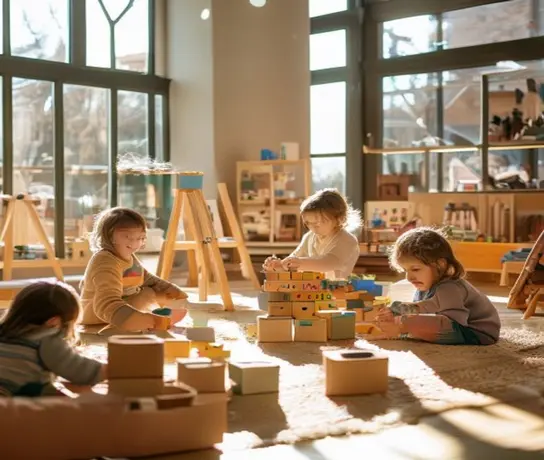
Decades of research, notably from institutions like the National Institute for Play, confirm that play is not merely recreation; it is the primary vehicle for learning in early childhood. High-quality play is child-initiated, open-ended, and process-oriented.
- Unstructured Play: Provide ample time and space for children to explore freely, without adult intervention or predetermined outcomes. This boosts creativity and problem-solving.
- Rich Materials: Offer a variety of loose parts (natural objects, recycled materials), art supplies, and construction tools that encourage imaginative play and engineering skills.
- Outdoor Exploration: Nature play has profound benefits for physical development, risk assessment, and connection to the environment. The “Forest School” model is gaining widespread recognition.
Early Childhood Education Tips – Digital Citizenship & Media Literacy
In our increasingly digital world, children are digital natives. Modern early childhood education tips must address responsible technology use from an early age. The American Academy of Pediatrics updates its guidelines regularly to reflect best practices.
| Traditional Approach | 2026 Modern Approach (Digital) |
|---|---|
| Strict screen time limits, often viewed negatively. | Contextualized screen time, focusing on quality and interaction. |
| Passive consumption of media. | Active engagement with educational apps and interactive content. |
| Technology as a separate activity. | Technology integrated thoughtfully into play and learning experiences. |
| Little emphasis on online safety for young children. | Introduction to basic digital boundaries and privacy concepts. |
The Evolving Role of Parents & Educators
The most impactful early childhood education happens when parents, caregivers, and educators work in synergy. The focus for 2026 is on creating a supportive ecosystem where communication and shared goals thrive.
Fostering Collaborative Ecosystems
Effective partnerships are built on mutual respect and shared understanding of child development. Regular dialogue and parent education workshops are critical.
- Open Communication Channels: Establish consistent feedback loops between home and school. Share observations, celebrate milestones, and address challenges collaboratively.
- Parent Education & Empowerment: Equip parents with the knowledge and tools to extend learning into the home environment, reinforcing concepts and strategies from the educational setting.
- Community Engagement: Connect families with local resources – libraries, museums, parks – to broaden a child’s learning experiences beyond the immediate home or classroom.
Early Childhood Education Tips : Debunking the “Earlier is Better” Myth
One persistent myth I aim to debunk is the notion that pushing formal academics, like early reading or advanced math, in preschool somehow guarantees future success. While foundational literacy and numeracy are crucial, research from institutions like the Centre for Early Childhood Development and Education consistently shows that an overemphasis on formal instruction too early can be counterproductive. It can stifle creativity, reduce intrinsic motivation, and lead to burnout. Our focus should be on building curiosity, resilience, and a love for learning through play and exploration, rather than premature academic drilling. True readiness for kindergarten and beyond stems from strong social-emotional skills and robust executive functions, not from being able to read at age four.
Staying Ahead: Future Trends in Early Childhood Education Tips
Looking towards the future, personalized learning pathways, enhanced neuroeducation research, and increased integration of artificial intelligence (AI) tools (used ethically and sparingly) will shape the next generation of early childhood education tips. We anticipate a greater focus on adaptive technologies that support diverse learning styles and needs, as well as a continued global emphasis on equity and access to high-quality early learning experiences for all children, regardless of socio-economic background.
Implementing Effective early childhood education tips
In conclusion, the journey of early childhood education is a marathon, not a sprint. The most impactful early childhood education tips prioritize a child’s natural developmental trajectory, fostering curiosity, resilience, and a deep love for learning through holistic, play-based, and emotionally intelligent approaches. By embracing these strategies, we equip our youngest learners with the essential tools not just for academic achievement, but for thriving in an ever-changing world.

Kurnia Ardha is a senior education strategist at Pralearn covering learning science, admissions, testing, and financial planning. 6+ years, 140+ guides. Method: cognitive research, admissions data, and aid policy modeling. Author of 2,084 education guides since 2022.




More Stories
Best Music Instrument: 7 Smart Picks for Beginners
Best Instrument: 7 Top Choices for Beginners
5 Essential Tips for Choosing best instruments for kids