
Table of Contents
Traditional skills represent practical abilities and crafts that humans have refined over centuries through hands-on practice and direct knowledge transfer. These competencies form the foundation of self-sufficiency and connect us to time-tested methods of creating, repairing, and problem-solving without modern technology dependencies.
The value extends beyond nostalgia. Research from the American Psychological Association indicates that engaging in hands-on craft activities reduces stress markers and improves cognitive function through tactile learning pathways.
Why Traditional Skills Matter More Than Ever
Modern educational systems prioritize digital literacy and abstract thinking. Yet practical abilities create tangible results that build confidence and competence simultaneously.
The Smithsonian Center for Folklife and Cultural Heritage documents how these capabilities preserve cultural heritage while developing problem-solving abilities that transfer across contexts. When you learn to mend clothing or grow food, you’re not just acquiring a single skill—you’re developing systems thinking.
Economic resilience forms another compelling argument. Households with diverse practical abilities reduce dependency on specialized services, cutting costs while increasing autonomy.
Core Categories of Traditional Skills
These capabilities span multiple domains, each offering unique benefits and applications.
Food Production and Preservation
Growing vegetables, preserving harvests, and preparing meals from raw ingredients represent foundational abilities. The USDA Extension program reports that home food preservation maintains nutritional value while reducing food waste by up to 30%.
Fermentation, canning, and dehydration don’t require expensive equipment. A basic understanding of food safety principles and pH levels protects against spoilage while creating shelf-stable provisions.
Textile Arts and Repair
Sewing, knitting, and garment repair extend the lifespan of clothing while offering creative expression. The Environmental Protection Agency notes that textile waste constitutes 5% of landfill content—skills in mending directly combat this waste stream.
Hand-stitching techniques like darning or patching require minimal tools: needles, thread, and basic knowledge of fabric structure. These repairs often outlast the original garment construction.
Basic Carpentry and Woodworking
Understanding joinery, wood properties, and hand tool operation enables furniture repair and custom construction. Mortise-and-tenon joints created without power tools often exceed the strength of modern fastener-based assemblies.
The National Wood Flooring Association emphasizes that properly maintained wooden items last generations, making these skills valuable for both creation and restoration work.
Evidence-Based Benefits of Mastering Traditional Skills
| Benefit Category | Specific Outcome | Supporting Evidence |
|---|---|---|
| Cognitive Function | Enhanced spatial reasoning and motor control | Johns Hopkins research on craft activities |
| Mental Health | Reduced anxiety through focused attention | APA studies on repetitive craft work |
| Economic Impact | Annual savings of $500-2000 per household | Consumer expenditure surveys |
| Environmental | Waste reduction through repair culture | EPA waste stream analysis |
The Neurological Advantage of Learning Traditional Skills
Neuroscience research from MIT demonstrates that hand-eye coordination tasks strengthen neural pathways differently than screen-based learning. The tactile feedback loop creates stronger memory consolidation.
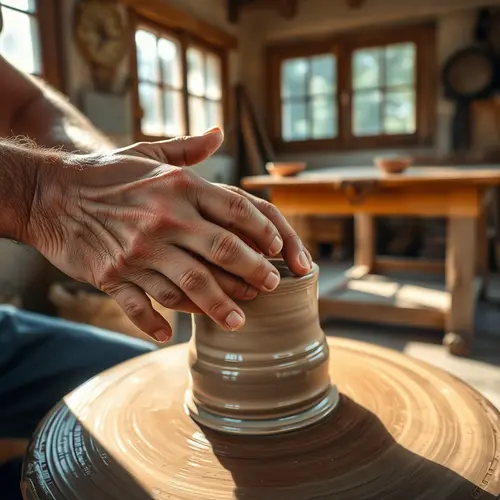
When you shape clay or plane wood, your brain integrates sensory information across multiple channels. This multi-modal learning creates robust skill retention that purely theoretical knowledge cannot match.
Practical Pathways for Skill Acquisition
Contrary to popular belief, you don’t need formal apprenticeships to develop competence in traditional skills. Strategic self-directed learning produces measurable results.
The 20-Hour Competency Threshold
Research by Josh Kaufman on skill acquisition shows that focused practice for 20 hours builds functional competency in most hands-on abilities. This breaks down to 45 minutes daily for one month.
Start with a single project rather than attempting to master entire domains. Complete one piece of furniture. Preserve one type of produce. Finish one garment repair. Completion builds momentum that theory never achieves.
Finding Knowledge Transfer Sources
- Local agricultural extension offices offer workshops on food preservation and gardening fundamentals
- Community colleges frequently provide non-credit courses in woodworking, welding, and textile arts
- Maker spaces and tool libraries combine equipment access with peer learning opportunities
- Specialized craft guilds maintain knowledge repositories and connect learners with experienced practitioners
- Public library systems increasingly stock tool lending programs alongside instructional resources
Traditional Skills : The Forgotten Value Proposition
The educational establishment often dismisses practical abilities as vocational rather than intellectual. This represents a fundamental misunderstanding of how humans develop mastery.
Abstract thinking without physical application produces shallow comprehension. When students learn physics through building structures or chemistry through fermentation, retention rates increase dramatically. The National Science Foundation has documented this connection repeatedly across multiple studies.
The false hierarchy that places desk work above hands-on creation damages both individual capability and societal resilience. Communities with diverse practical skills weather economic disruptions more effectively than those dependent on narrow specialization.
Common Misconceptions About Traditional Skills
Many people assume these abilities require expensive tools or dedicated workshops. Most foundational skills need surprisingly minimal equipment. Basic sewing requires needles and thread. Food preservation needs jars and heat. Woodworking can begin with handsaws and chisels purchased secondhand.
Another myth suggests you need innate talent. Competency comes from deliberate practice following proven methods. The initial awkwardness everyone experiences disappears with repetition.
Integration Into Modern Life
You don’t need to abandon technology to benefit from traditional skills. Smart integration produces optimal results.
Use digital resources to access historical techniques, then practice them physically. Document your projects photographically while performing the work manually. This hybrid approach preserves the cognitive benefits while leveraging modern information access.
Start with repairs rather than creation. Fix broken items before attempting new construction. This builds confidence while generating immediate practical value. A repaired chair costs nothing beyond materials and time.
Building Long-Term Capability
Mastering traditional skills creates compounding returns. Each ability you develop makes related skills easier to acquire through transferred principles and increased confidence.
The person who learns basic carpentry finds metalworking more accessible through shared concepts of measurement, joinery, and material properties. Food preservation knowledge transfers between methods once you understand the underlying microbiology.
These capabilities represent investments that appreciate rather than depreciate. Unlike purchased goods that wear out, skills strengthen with practice and remain available throughout your lifetime without ongoing costs.

Kurnia Ardha is a senior education strategist at Pralearn covering learning science, admissions, testing, and financial planning. 6+ years, 140+ guides. Method: cognitive research, admissions data, and aid policy modeling. Author of 2,084 education guides since 2022.




More Stories
Giuseppe Guarneri: Master Violin Maker’s Timeless Legacy
Easiest Instrument to Learn: 7 Top Picks
7 Essential Skills Every Professional Orchestra Players Need